Contact Us



Location
Our mailing address :
1956 Robertson Road
Suit 201
Ottawa, Ontario
Canada K2H 5B9
HOW SENIOR EXECUTIVES IDENTIFY AI RISKS EARLY
Executives know AI transformation is not traditional IT transformation. AI keeps changing across the full lifecycle.
- know that outcome is only realized when strategy, governance, data, models, and execution all align
- value early warning signals that reveal where AI initiatives are exposed before failure occurs
- ensure AI readiness, risk mitigation, and execution capability before scaling investment
- value specialized diagnostic solutions instead of trying to detect every AI risk manually
WorkforceAI probes the full AI workflow— strategy, governance, data, models, and execution — to unmask success or failure points.
Get The Executive Brief: How to Lower Risk in Your AI Initiatives
WITHOUT INSIGHTS
- • Possible high risk of hidden project hurdles
- • Limited evidence on why project is stalling
- • Fruitless efforts to identify workflow bottlenecks
- • Lower management and team confidence
- • Results in stagnation leading to financial losses
WITH VISIBILITY
- • Avoidable financial loss detection
- • Turn AI pilots outcomes into measurable ROI
- • diagnose hidden risk in 48 hours
- • Low effort, no learning curve, high ROI
- • Expose where your AI project is failing — before it fails
- • actionable loss prevention insights within 48 hours.
Major Progress Enabled With AI Risk Diagnostics
- From reactive to proactive mode with evidence-based AI risk management
- Reveals weak spots across the entire AI lifecycle before they threaten outcomes
- Managers and teams close readiness gaps before they become operational bottlenecks
- Exposes costly blind spots that impact project ROI by reducing risks before scaling.
- Spot gaps early to prevent delay and help AI initiatives reach measurable outcomes faster.
Book a FREE 30-minute consult to see how WorkforceAI helps leaders spot AI risk easily, expose team readiness gaps, and move active AI initiatives forward with confidence.
FREE 30-Minute ConsultRisk Visibility: A Foundational Pillar of AI Project Success
Strategy, governance, data, models, and execution are all critical. AI initiatives fail when hidden gaps across this workflow remain hidden.
AI projects risk gaps keep mutating. Many AI initiatives stall because decision-makers misdiagnose the weak points—whether in governance, data readiness, model, or execution stage.
Risk insight is the layer that helps leaders validate AI readiness, prevent failure, and protect return on investment before scaling.
Successful AI adoption shifts from experimentation to validated, business-driven execution where risk is visible and decisions connect directly to measurable outcomes.
AI Readiness and Risk Assessment Matter
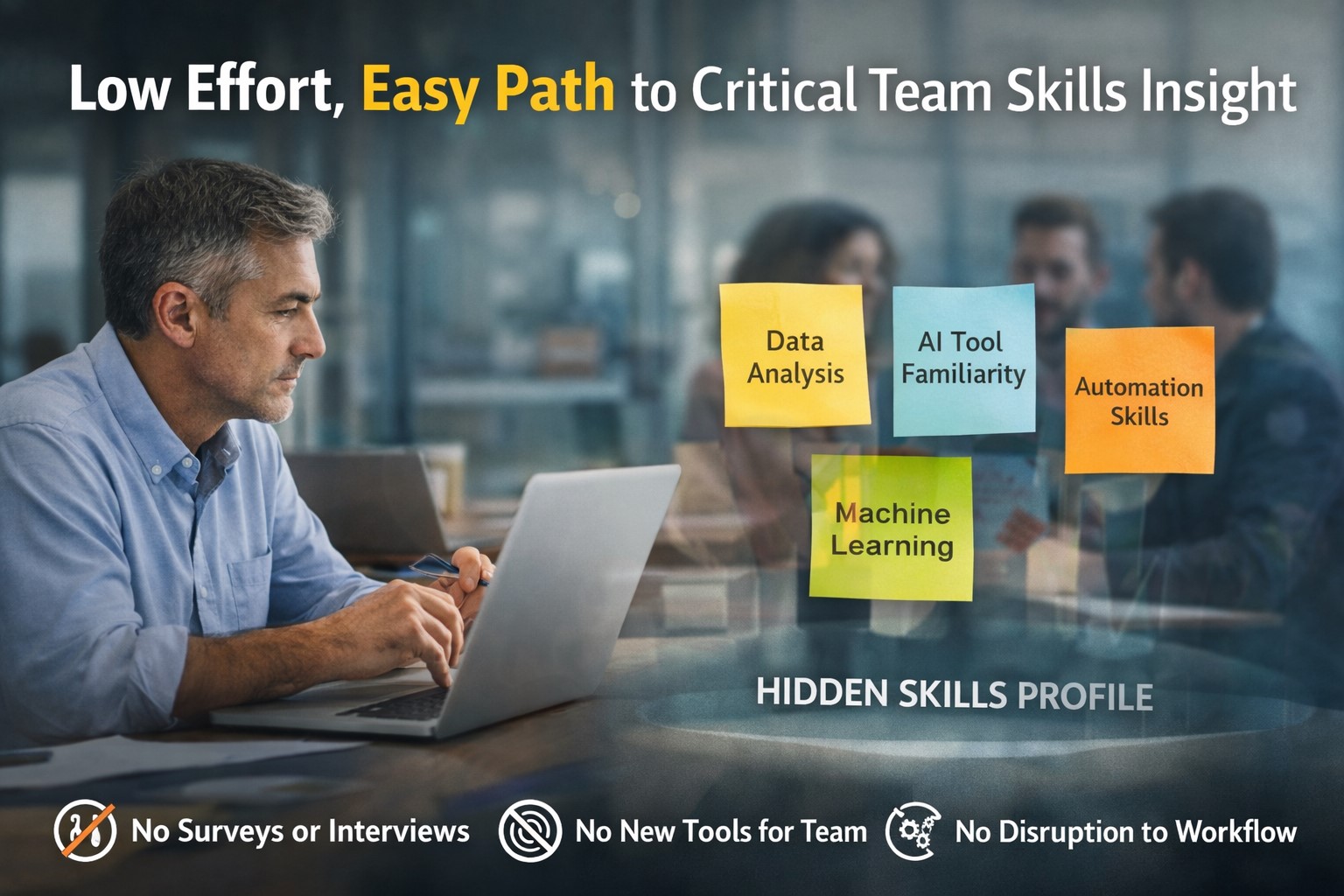
AI readiness focuses on strategy, governance, data, infrastructure, models, culture, and talent. Risk visibility exposes whether an AI initiative is truly ready to succeed.
These foundations are essential, but leaders also need a diagnostic capability that shows where the initiative may fail before outcomes are affected.
Execution is the stage where readiness, hidden defects finally delays, stalls or derails the project leading to cost overruns, or outright failed adoption. A key determinant of AI readiness is the ability to detect change early across teams, workflows, governance, data and models.
The gap between required capabilities and current conditions requires an AI early-warning system for risk, readiness, and execution. Reaction time—the speed at which risk gaps are detected and addressed—is often the difference between success and failure. AI moves rapidly. Traditional reviews and training often come too late. Leaders need fast diagnostics that help manage existing workflows without disruption.
WorkforceAI fills this gap by identifying where AI initiatives are risk-prone and quickly alerting leaders of risks before they impact expected outcomes.
People Enablement: Build AI Readiness Into Teams
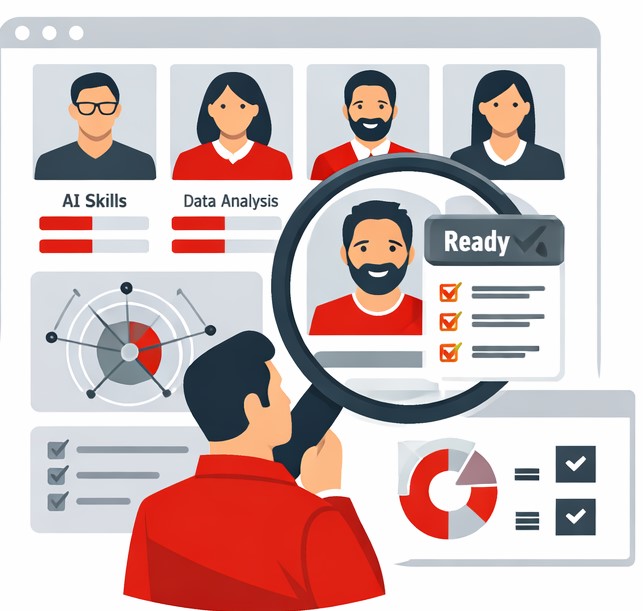
Supporting a culture of AI readiness across all team members is a critical driver of successful long-term AI adoption. Beyond technology and internal resistance, AI initiatives often fail when teams, governance, data, and operating workflows are unprepared for real-world deployment.
A successful enablement strategy requires inclusion and transparency. This builds curiosity, psychological safety, and continuous commitment so teams can move from pilots to enterprise adoption with greater confidence and lower risk.
AI adoption succeeds at the Leader -> Manager -> Team level. With WorkforceAI comprehensive risk insights, leaders, managers and teams see where projects are exposed. Decision-makers will support teams more effectively, and enable the project to advance with greater confidence.
Continuous AI Risk Insight – The Key Ingredient of Success
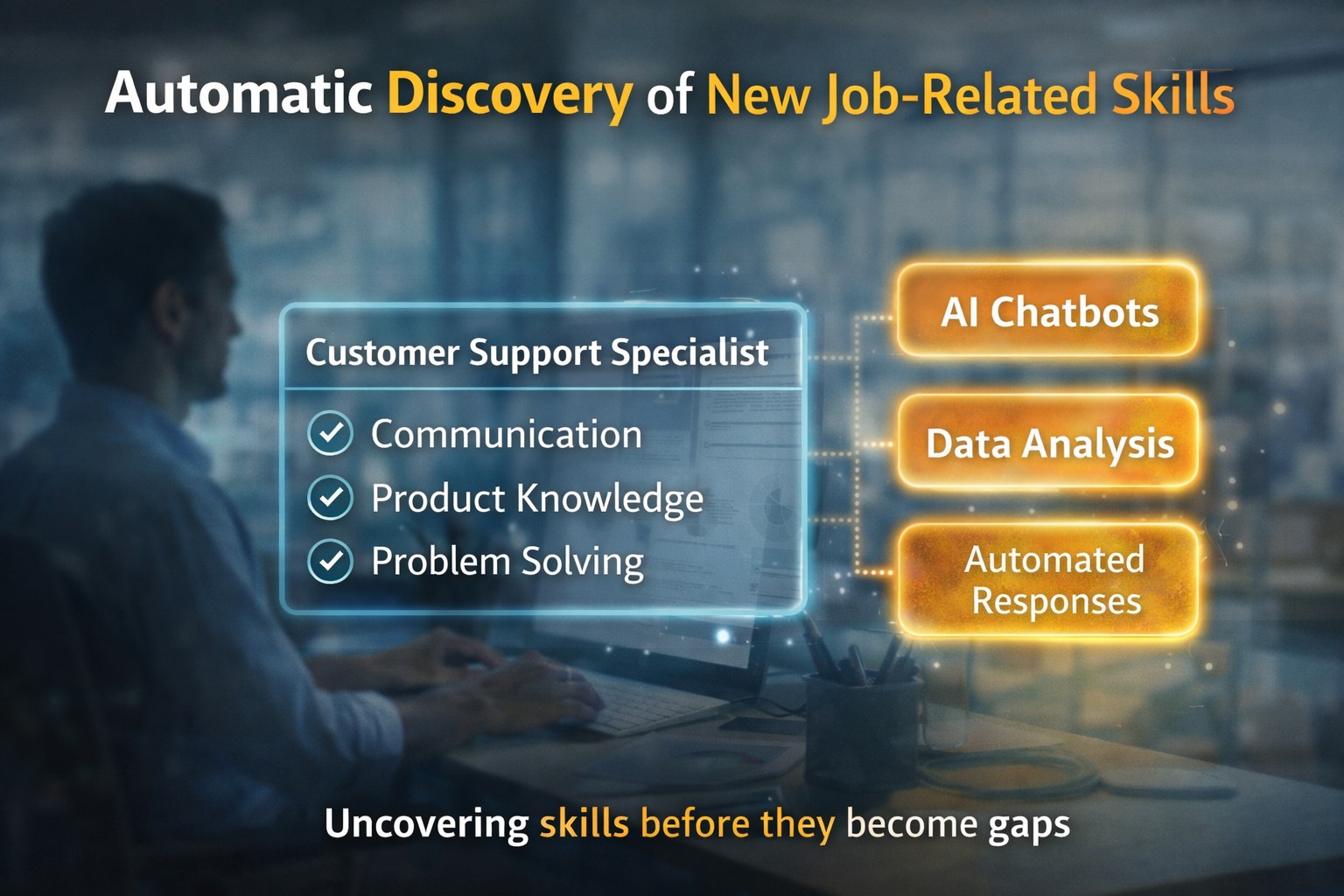
Organizations that succeed with AI look beyond data and models alone. They continuously assess change, people readiness, governance know-how, data quality, model suitability, and execution capabilities as change advances.
AI initiatives deliver positive results when foundational capabilities, controls, data, models, and teams remain ready and aligned with project goals.
Leaders need a system that tracks change, identifies impending risks and alerts them when gaps emerge that affect the AI initiative.
Blind-spots often mask unexpected risk. These continue to derail many AI initiatives. Without a means to expose these, risks remain dormant. They must be examined and resolved before teams can successfully scale the AI project. Decision-makers need current insight into AI changes that affect workflows, roles, governance, data use, and execution readiness.
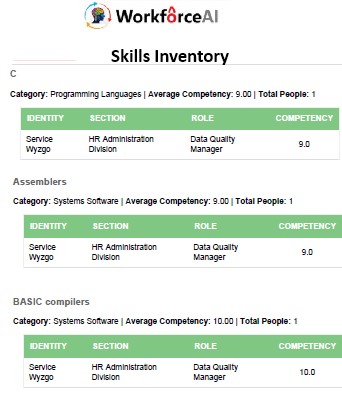
See the 48-Hour Diagnostic in Action
WorkforceAI delivers structured AI initiative risk intelligence within 48 hours—fast enough to support timely executive and management decisions. This gives project sponsors and decision-makers quick, timely insight into where AI initiatives may be exposed.
Detailed reports are provided that reveal where risk gaps may exist, which teams or workflows could be affected, and what actions may reduce exposure across the AI lifecycle.
A single overlooked governance, data, model, or execution gap can determine the success or failure of an entire AI initiative.
Instead of high-risk, high-harm AI rollouts, better results come from diagnostic clarity, incremental validation, faster delivery, and lower risk. Diagnose fast. Validate risk. Scale with confidence.
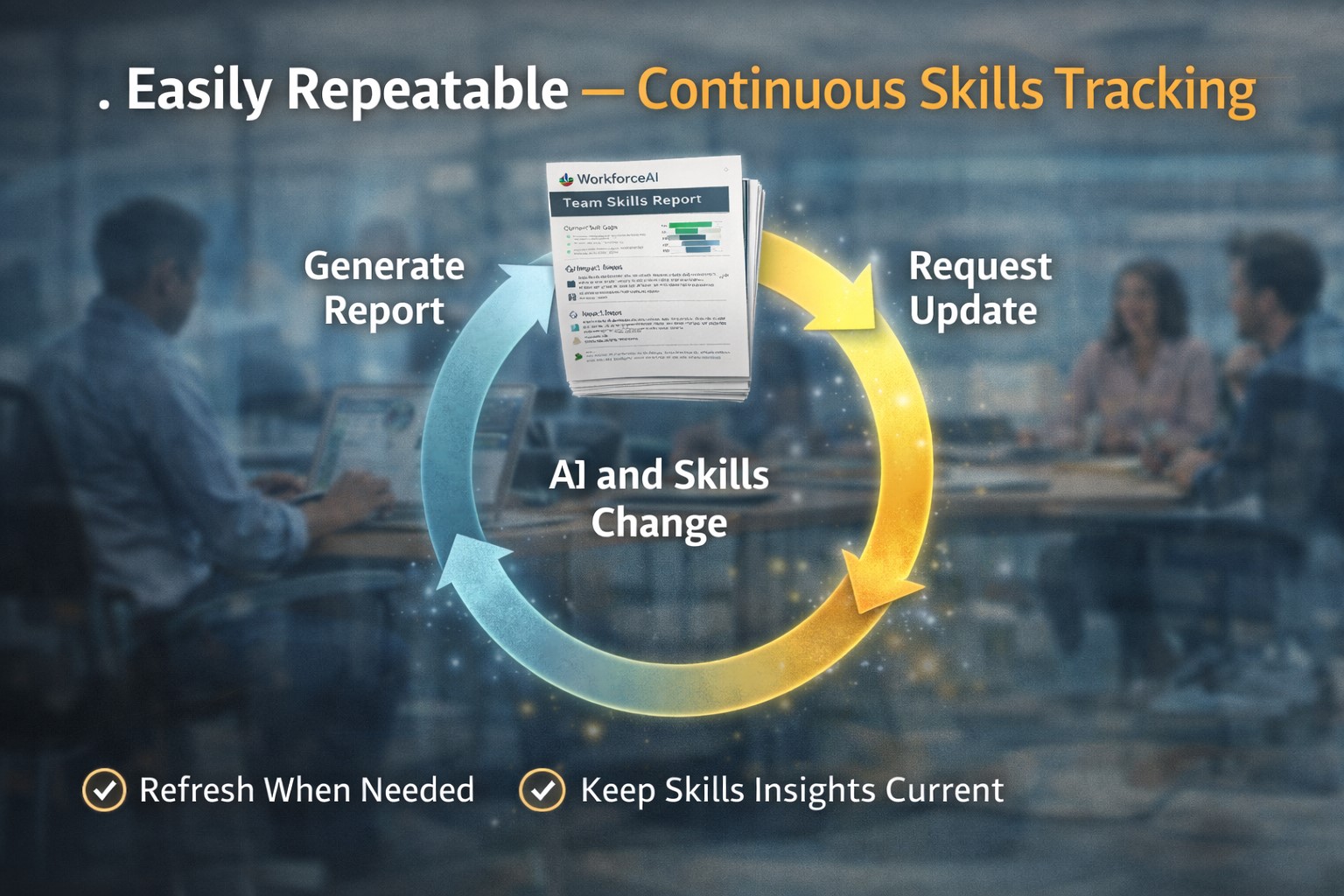
Early Warning Signals: A Game Changer for AI Risk Avoidance
Early warning signals act as a compass for AI leaders, revealing where initiatives are drifting before projects shift off-course.
By detecting governance deficiencies, data gaps, model weakness, workflow misalignment, and capability shortcomings early, leaders can act before performance declines. Managers and teams can use these cues to adjust models, workflows, controls, and readiness deficiencies before outcomes are impacted.
Early actions can mean the difference between AI success and costly failure—keeping teams updated, protecting budget, preserving credibility, and improving ROI.
WorkforceAI proactively identifies inherent and emerging risk signals across active AI initiatives and informs leaders where intervention may be needed.
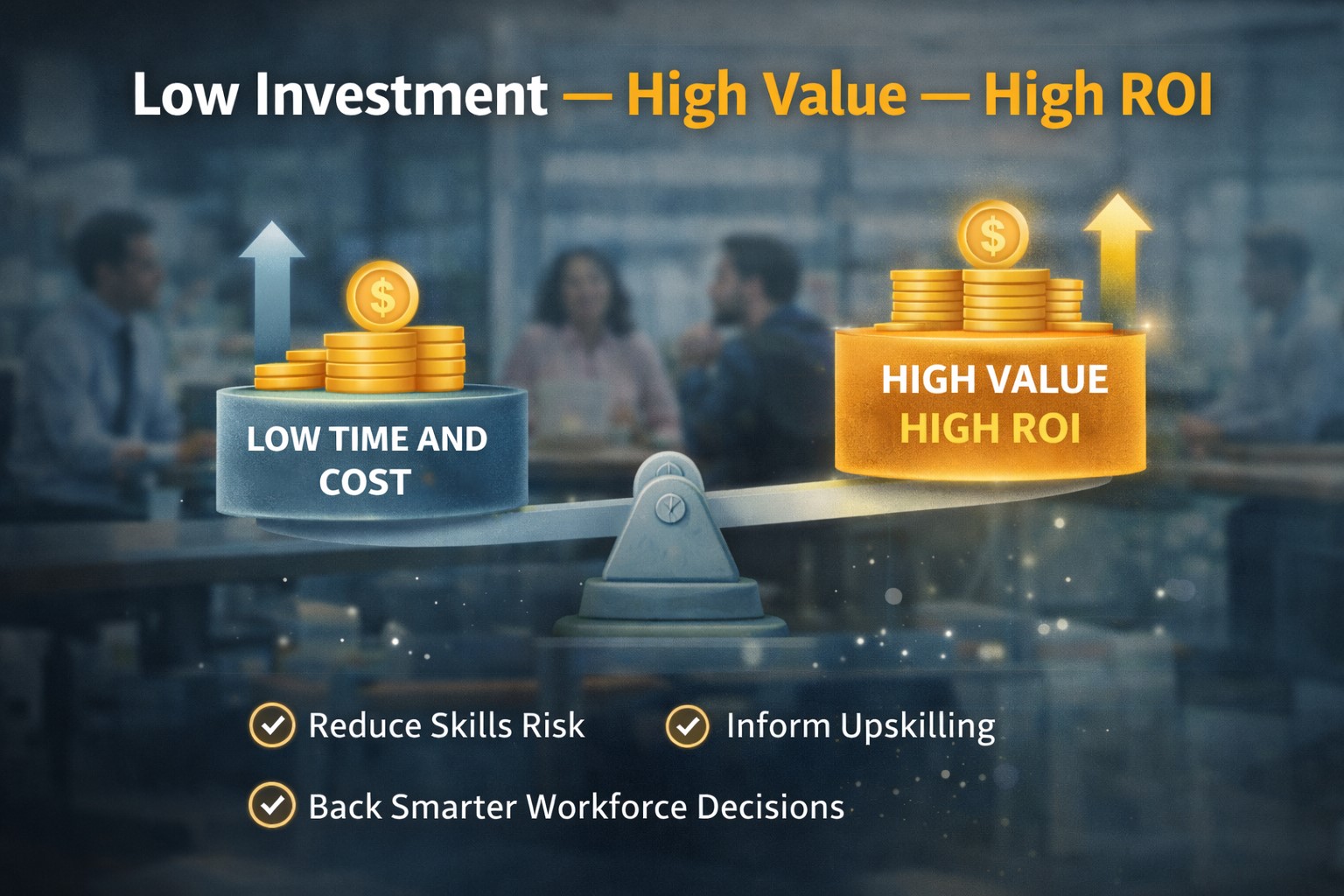
How Organizations Adapt to Fast AI Change
AI project failure rates remain high even as investment grows, because organizations often scale AI faster than they fix readiness, governance, data, and execution gaps.
AI adoption is an ongoing risk-management journey.
Expiring capabilities, misdirected governance, incomplete data readiness, and execution capability gaps cause organizations to fall behind AI change. The challenge: ensuring capabilities across the AI workflow segments, ensuring teams continued competencies to uncover project exposure, govern, and embed AI risk insight safely into daily workflows.
Traditional change management and periodic assessments cannot keep pace with AI evolution fast enough.
Compounding this dilemma is a leadership visibility gap that blinds executives and managers from seeing where AI risk is emerging.
New approaches are needed—moving from static assessments to dynamic AI risk diagnostics that support continuous readiness and adaptation.
One way to meet this challenge, organizations are adopting people-first AI models that augment team members while managing risk across the full workflow cycle.
Another approach is to prioritize readiness, capable governance, and inline learning into daily workflows rather than treating them as separate issues. Companies that handle these challenges proactively, improve productivity, gain confidence, improve employee engagement, and succeed in achieving measurable AI outcomes.
Learn From Big-Bang AI Failures
Deploying AI across large systems, agents, workflows, and LLMs is complex—and opens up many hidden points of failure.
Experience shows that big-bang AI initiatives often fail to deliver expected results. Organizations that succeed avoid this trap. Instead, they are using diagnostic applications, incremental validation, and people-in-the-loop guardrails to realize outcomes more accurately and faster with lower risk.
Identifying a specific risk or project bottleneck before scaling, is far more effective than launching a massive AI platform all at once.
People supported by an AI companion—and guided by risk insight—show the way forward. Successful firms recognize that AI success depends on people, governance, data, models, and execution—not technology alone.
Attention to early-warning signals and leading indicators is essential for managing AI initiative risk effectively.
These deliver visible value earlier, driving incremental improvements, building momentum, and strengthening organizational confidence more reliably.
WorkforceAI fills a key void by providing decision-makers the people skills insights needed to succeed with AI adoption.
AI adoption is an ongoing journey. Expiring skills top the list of reasons why organizations fail to keep pace with AI change. The challenge is the ability of teams to identify and embed AI updates into daily workflows.
Traditional change management and training methods cannot respond to this challenge.
Compounding this is a leadership learning lag that deters senior executives and managers from keeping pace with AI change.
New approaches are needed—moving from static assessments to dynamic AI risk diagnostics that support continuous readiness and adaptation.
One way to meet this challenge, organizations are adopting people-first AI models that augment team members while managing risk across the full workflow cycle.
Another approach is to prioritize readiness, capable governance, and inline learning into daily workflows rather than treating them as separate issues. Companies that handle these challenges proactively, improve productivity, gain confidence, improve employee engagement, and succeed in achieving measurable AI outcomes.
Recent research by reputable firms like MIT reveals the high rate of failures among big-brand companies that tried the big-bang approach to AI adoption, and most failed miserably, losing billions in the process. We can learn from their mistakes.
While data and integration issues topped the list of causes at the preparation stage, lack of AI skill-ready talent at the execution stage also played a major role in these failures.
Failing to perform AI readiness assessments of teams and lacking insight into capabilities led to execution blindness that resulted in frustrated employees, low adoption rates, and active resistance as they saw AI as a threat to their roles.
The 5% that succeeded used a series of smaller initiatives that showed far better outcomes within the same time frame and significantly higher employee morale.

Your AI Initiative Risk Assessment Check
The gap between AI ambition and successful outcomes is enormous. An AI risk diagnostic tool shows where your initiative is exposed—and where the critical gaps are. Main factors that impact AI initiative risk:
1. Strategy and leadership alignment
• Examines leadership alignment, AI fluency, and connection to measurable project outcomes.
2. Governance, compliance, and control
• Effective AI governance enables innovation while reducing legal, financial, and reputational risk.
• Without robust governance, AI initiatives face legal, financial, operational, and reputational exposure.
• Compliance readiness
• Dynamic governance includes agent oversight, model monitoring, compliance controls, and performance management.
3. Data readiness and maturity
• Data quality, accessibility, governance, and infrastructure determine what AI can safely and effectively do.
4. Technology infrastructure
• AI risk avoidance starts with a resilient infrastructure that ensures secure deployment, controlled integration, and continuous oversight across all technical components.
5. Culture and change readiness
• Adoption risk rises when teams lack trust, alignment, and confidence in leadership's AI direction—often leading to resistance, shadow behaviours, and stalled execution.
• Gaps in leadership credibility, transparency, and innovation culture amplify resistance and hidden behaviors—directly increasing AI initiative risk.
6. People and skills
• AI strategy fails where people readiness and alignment break down—this is the most common failure point.
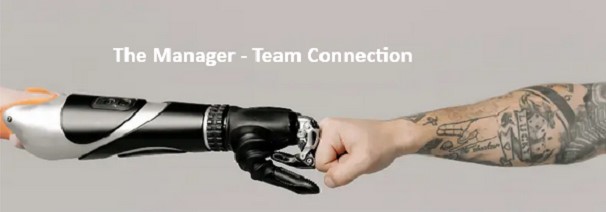
AI transformation projects fail when readiness, governance, data, models, and execution cannot keep pace with AI change. WorkforceAI gives leaders the AI risk visibility, readiness insight, and early-warning signals needed to avoid costly failures.
WorkforceAI analyzes strategy, governance, data, models, and execution to identify weaknesses across each stage and alert leaders before gaps threaten outcomes.
By treating AI as a teammate—not just a tool—organizations can combine technical expertise, domain knowledge, governance, and change leadership to reduce risk.
WorkforceAI helps leaders and managers guide active AI initiatives with visibility, speed, confidence, and reduced risk.
What Team Managers Say

Doug Stewart - Marketing Manager, 321 Gang Inc.

Fuad Khan - CEO, Twelvedot.com

Idrees Ali - Business Strategy Consultant

Nabil Duale - Network & Security Specialist, Canadian Blood Services

Peter Brown - Global Workforce Leader, Partner, PwC UK

René Janssen - Founder & CEO, Lepaya

Kim Morick - IBM’s Global HR Technology Leader
Location
Our mailing address:
1956 Robertson RoadSuite 201
Ottawa, Ontario
Canada K2H 5B9

Contact Us
Location
Our mailing address :
1956 Robertson Road
Suit 201
Ottawa, Ontario
Canada K2H 5B9